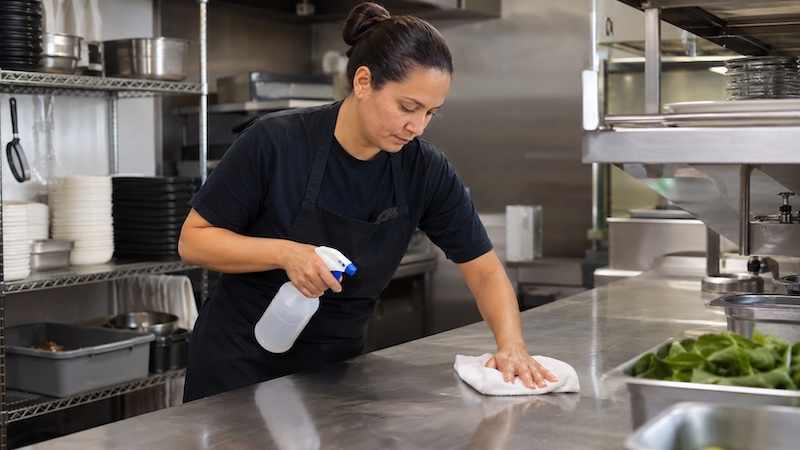
Cross-contamination is one of those terms that gets thrown around in food safety training without anyone explaining what it actually means in practice.
Here’s the plain english version:
cross-contamination is when harmful microorganisms, or allergens, are transferred from one surface, food, or object to another.
It’s why raw chicken and salad greens shouldn’t share a chopping board.
It’s why the knife that cut raw fish needs to be washed before it touches anything else.
It sounds obvious when stated directly.
Except it is one of the leading causes of foodborne illness, precisely because it happens without anyone noticing.
Three Types of Cross-Contamination
Food to food:
The most common form.
Raw meat drips onto ready-to-eat food in the fridge.
The same tongs handle raw prawns and then cooked ones.
Unwashed vegetables are stored beside salad ingredients.
Contact surface to food:
A chopping board used for raw chicken is wiped down and reused on vegetables.
A thermometer probe is used on multiple products without sanitising between uses.
Food handler to food:
A food handler sneezes over food, touches their face and then handles food, or returns to work while still unwell.
How to Prevent It
Use colour-coded equipment.
Different coloured boards and utensils for different food types, raw meat, raw fish, ready-to-eat, fruit and vegetables, make it easy to avoid mistakes and easy to audit compliance.
Separate raw from ready-to-eat in storage.
Raw meat, poultry, and seafood go below ready-to-eat food in the refrigerator.
Any drips go down, not onto food that’s about to be eaten without further cooking.
Wash, rinse, sanitise, in that order.
Cleaning removes visible food residue.
Sanitising kills or reduces microbial contamination to safe levels.
Both steps are necessary.
Sanitiser is far less effective on a surface that hasn’t been cleaned first.
Manage allergens carefully.
Cross-contamination of allergens is a separate and serious issue.
Even trace amounts of a major allergen can trigger a severe reaction.
Train everyone.
Cross-contamination often happens through habit, or through never being told why the rules exist.
A kitchen where people understand the reason behind each practice is a much safer one.